One System, Two Revenue Streams: How to Sell and Rental from the Same Counter
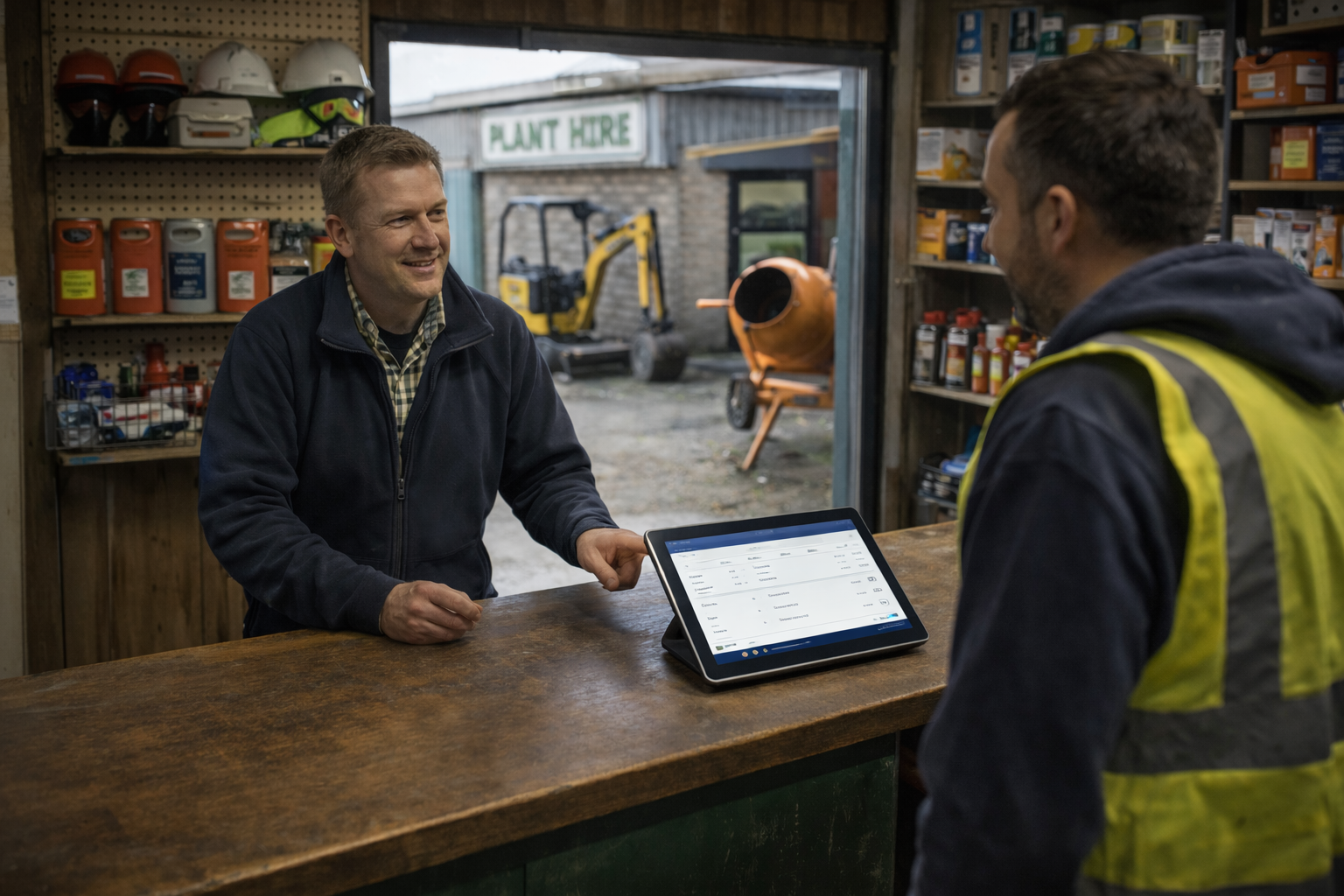
Most independent rental shops are running two systems side by side without fully realising the cost of it. One for rental — tracking what's out, what's back, what's invoiced. Another for anything that leaves the shop without a rental contract: a separate till, a spreadsheet, a standalone accounts entry.
The right plant rental shop software handles both from a single counter, on a single invoice, with no duplication between them.
The Two-System Problem Most Rental Shops Don't Realise They Have
Walk into a typical independent rental shop and there's a good chance the team is managing rental and retail as two entirely separate workflows. Neither system knows what the other is doing.
Double data entry. Stock levels tracked in two places — or nowhere at all. A customer hiring a concrete saw who also needs a diamond-tip blade ends up on two separate transactions because the systems can't connect. The invoice goes out missing a line item. The stock count drifts. And at the end of the month, someone spends hours reconciling figures that should never have been separate in the first place.
This is the quiet operational overhead that almost every independent rental shop with any retail offering is carrying — usually without fully noticing it.
What Actually Gets Missed When Rental and Retail Are Separate
The most obvious cost is time. Every transaction that touches both rental and retail creates extra work: additional entries, separate receipts, manual transfers between systems. For a counter team already juggling phone calls, equipment checks and deliveries, that friction adds up fast.
The less visible cost is accuracy. When rental and retail are handled separately, things fall through the gaps. A customer returns a breaker and the member of staff forgets to charge for the fuel used. A box of fixings goes from shelf to van with a promise to sort it on the invoice later — and later never quite comes. A pair of safety glasses gets handed over at the counter and never makes it onto a bill.
None of these are disasters on their own. But across hundreds of transactions a year, they represent real, uncaptured revenue and stock records that nobody fully trusts.
How Combined Plant Rental Shop Software and EPOS Works Day to Day
HireLogic handles rental and retail from a single system, which means a single transaction can include rental items and consumable or retail products on the same invoice.
The rental shop builds a library of retail products within HireLogic — fuel, PPE, accessories, consumables, whatever they stock. Each product can be configured to appear on rental transactions, repair invoices, sales invoices or any combination of the three. When a customer rentals equipment and picks up items at the same time, everything goes on the same transaction.
There's also the ability to add free-text line items to any transaction — useful for ad hoc items or anything needing a custom description. For the counter team, this means one workflow instead of two. The rental gets raised, the extras get added, the invoice goes out. No switching between systems, no manual reconciliation, nothing that slips through because the second system wasn't opened.
Adding Consumables and Accessories to a Rental Invoice: What It Looks Like in Practice
The consumables section of every rental contract in HireLogic is where retail items sit alongside the rental lines. Adding a product is the same action as adding a rental item — select it from the library, specify the quantity and it appears on the invoice.
A familiar example from the plant rental sector: a customer rentals a disc cutter for cutting concrete or tarmac. The appropriate diamond-tip blade is provided alongside the equipment. On dispatch, the tip measurement is recorded. On return, it's measured again and the customer is charged per unit of blade use. That charge sits cleanly on the same invoice as the rental — calculated and recorded in the same rental and retail EPOS system.
The same logic applies to less technical add-ons: fuel for a generator, nails for a nail gun, safety glasses for a customer who arrived without PPE, bar oil for a chainsaw. All of these can be added to the rental transaction at the counter, charged correctly and included on a single invoice that pushes through to the accounting package.
Stock Management: Knowing What You've Got and What Needs Reordering
HireLogic tracks stock levels for retail products through its rental shop POS functionality. Each item has a quantity in stock and transactions reduce that figure accordingly. A reorder level can be set per product to flag when stock is running low.
This is a practical layer of stock control that works well for rental shops with a modest retail offering. It gives the counter team a single, accurate view of what's available to sell — without maintaining a separate spreadsheet or running a separate stock count.
A dedicated reorder report is currently in development, driven by customer demand as more businesses begin using the retail side of the system more seriously.
One Counter, One System, One Invoice
The practical upside of combining plant rental shop software with EPOS goes beyond efficiency. It changes how the business presents itself to customers.
A clean, itemised invoice covering the equipment, the consumables, the fuel and any extras — all on one document, all with the correct VAT treatment, all pushed automatically to Xero or Sage — looks professional. For an independent rental shop competing against national operators who have had integrated systems for years, that matters more than most owner-managers realise.
One existing HireLogic customer previously used Sage at their counter to issue sales invoices separately from their rental transactions. That integration is in the final stages of completion — moving their retail invoicing fully into HireLogic so that everything runs through one system, one workflow, one accounting push. It's a practical change, but the impact on the counter team's day-to-day will be significant.
Frequently Asked Questions About Plant Rental Shop Software with EPOS
Can rental and retail items appear on the same invoice in plant rental shop software?
Yes. In HireLogic, rental items and retail or consumable products can be added to the same transaction and appear on a single invoice. The system includes a dedicated consumables section on every rental contract, and free-text line items can be added for anything not in the standard product library.
What types of retail products do rental shops typically sell alongside equipment rental?
The most common items sold alongside rental include fuel, PPE, fixings, consumable blades such as diamond-tip blades for disc cutters and saws, bar oil and other job-specific accessories. Some businesses also sell small tools outright rather than hiring them, and these can all be managed through the same rental and retail EPOS system.
Does HireLogic track stock levels for retail products sold at the rental counter?
Yes. Each retail product has a stock quantity that reduces with each sale. A reorder level can be set per product to flag when stock needs replenishing. A full reorder report is currently in development.
Do I need separate card reader hardware for retail sales?
HireLogic processes payments through its Stripe integration, which covers rental, retail and repair transactions. Customers currently use their existing standalone card readers alongside the system. Integration with Stripe Terminal card readers is on the development roadmap.
Can retail products be added to repair invoices as well as rental invoices?
Yes. Retail and consumable products can be configured to appear on rental contracts, sales invoices, repair invoices or all three — depending on how each product is set up in the rental shop software.
If you'd like to learn more about how we can help your business, please book a demo now.
