How to Get Paid Faster Without Chasing Your Customers
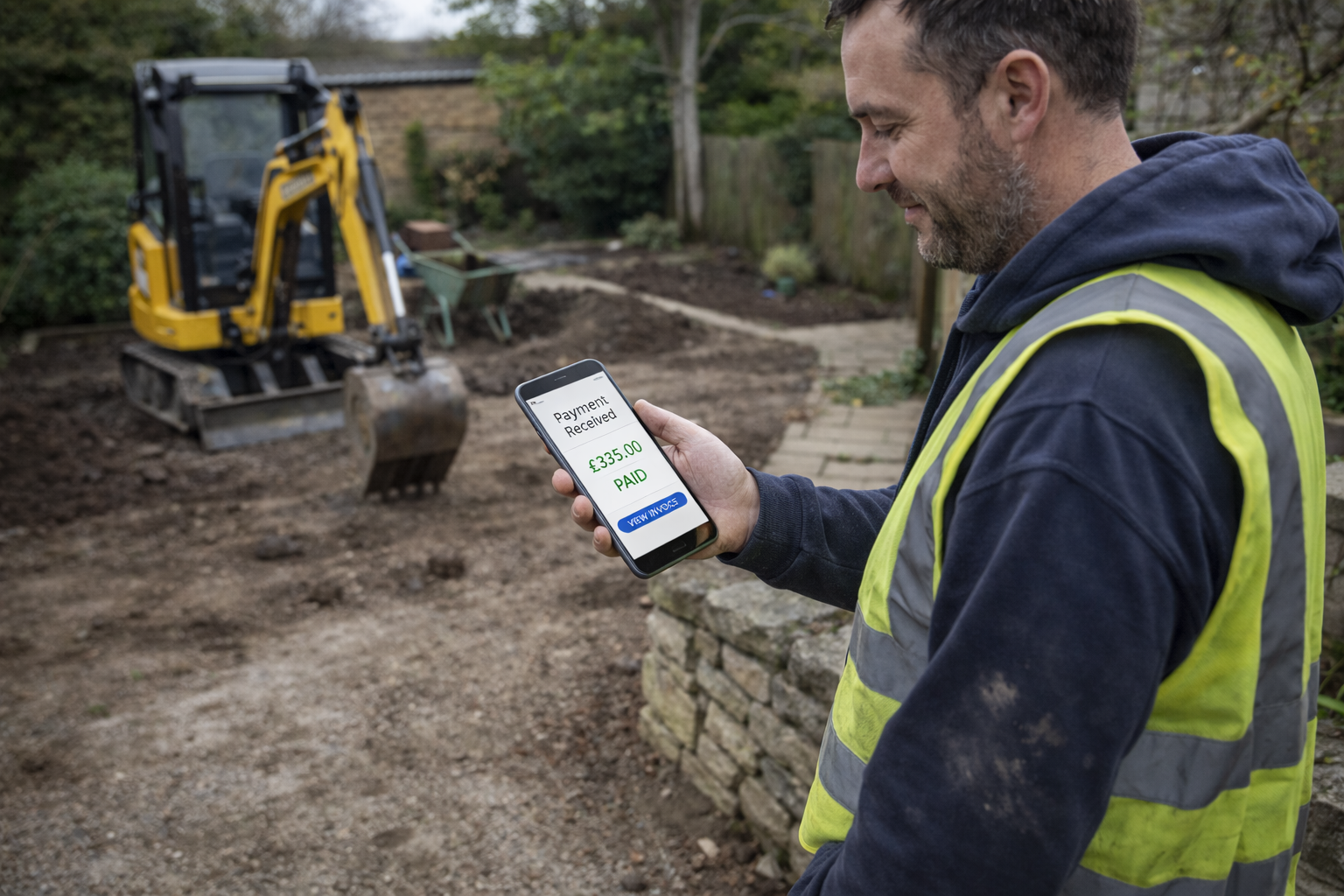
Construction is officially the worst-paying industry in the UK. A 2025 survey by Coface found that 95% of construction businesses reported rising payment delays — the highest of any sector surveyed — with the average delay now standing at 32 days beyond agreed terms. For the small rental businesses supplying that sector, the downstream effect is predictable: the job is done, the equipment is back in the yard, and you're still waiting on the money.
The frustrating part is that most of these delays aren't caused by customers who can't pay. They're caused by friction in the equipment rental invoicing process itself — delays that are largely within your control to remove.
The Rental Business Payment Pipeline: Where the Delays Actually Happen
In a typical small rental operation, the payment journey looks something like this. Equipment goes out, comes back, gets checked in, and at some point — maybe the same day, maybe later in the week — an invoice gets raised and emailed. The customer receives it, files it, and processes it whenever their accounts cycle allows. You wait. If a few weeks pass without payment, you chase.
The process has several natural delay points built into it:
The gap between off-rental and invoice being raised
The gap between invoice being sent and the customer opening it
The absence of any clear, immediate prompt to pay
The reliance on bank transfers, which require the customer to actively initiate a transaction on their own schedule
Each delay is small in isolation. Together, they routinely add weeks to the time between completing a job and being paid for it. Better equipment rental invoicing practices — specifically, getting a payment link in front of the customer at the earliest possible moment — close most of these gaps directly.
Payment Links Embedded in Quotes: How It Changes the Dynamic
The most effective single change a rental business can make to its payment timeline is to include a payment link at the point of quoting — not just when the invoice goes out.
In HireLogic, a payment link can be generated from any transaction: quotes, rental contracts, invoices and repair invoices all support it. Within the payment section of each transaction, clicking the payment link button prompts you to enter an email address and an amount. The amount pre-populates with the outstanding balance, though it can be adjusted. The customer receives the link by email and can pay immediately, by card, through a secure Stripe-powered payment page.
The shift this creates is significant. A quote that arrives with a payment link isn't just a document to file — it's a prompt to act. The customer doesn't need to find your bank details, log into their online banking and set up a transfer. They click, enter their card details, and the payment is done. For a customer who intended to pay but kept not quite getting around to it, removing that extra step is often all it takes.
One HireLogic customer described this as considerably more streamlined than their previous approach of emailing bank details and waiting for direct transfers. The ability to send and track payment links directly within HireLogic — without switching to a separate platform — has materially changed how quickly they get paid.
Taking Deposits at the Point of Booking: Less Friction, Less Risk
For bookings that come in through HireLogic's customer website, deposit collection is built into the booking flow. The rental shop can configure the system to require a deposit as part of the booking request, or to request it at the quotation stage once the booking has been reviewed.
The amount is entirely configurable — a token deposit to secure the booking, a percentage of the total rental value, or the full amount upfront for high-demand equipment or peak periods. There is no minimum or maximum imposed by the system.
Collecting a deposit early does two things. It confirms commitment — a customer who has paid something is far more likely to follow through. And it brings cash into the business before the rental even begins, rather than weeks after it ends. In a sector where payment delays affect 95% of construction businesses, getting part of the value in before the equipment leaves the yard is a meaningful change to rental business cash flow.
Flexible Equipment Rental Payment: Counter, Online or on the Road
Not all payments happen at the booking stage or via invoice. A walk-in customer wants to pay before they leave. A driver delivering equipment takes a final payment on site. A repair job is collected and the customer wants to settle up at the counter.
HireLogic's payment link mechanism works across all of these scenarios. The link can be sent to any email address for any transaction type, whether the customer is standing in front of you or at the other end of a phone call. When a customer pays via Stripe, they can consent to having their card details stored securely. Future equipment rental payments from that customer can then be processed without them needing to re-enter their details — a useful shortcut for repeat customers and ongoing accounts.
For counter payments, rental shops currently use their existing standalone card readers alongside HireLogic, with payments recorded in the system. Integration with Stripe Terminal card readers — allowing card payments to be captured and reconciled directly within HireLogic — is on the development roadmap.
What Faster Equipment Rental Invoicing Does for Cash Flow
The relationship between payment speed and business health is direct. Cash that arrives quickly can pay wages, cover fuel, service equipment and fund new stock. Cash that arrives slowly creates a constant low-level strain — always waiting for something to come in before something else can go out.
Getting paid faster doesn't require chasing harder or being more aggressive about terms. It requires making it easy and immediate for customers to pay at the point where they're most motivated — when they've just accepted a quote, received their equipment, or confirmed a booking. Payment links, built-in deposit collection and saved card details are the practical tools that make that possible.
In a sector where 95% of businesses report payment delays as a significant problem, the rental shops that remove the friction from their equipment rental invoicing process have a real and immediate advantage.
Frequently Asked Questions About Equipment Rental Invoicing and Payment
How do payment links work in equipment rental invoicing software?
In HireLogic, a payment link can be generated from any transaction — including quotes, rental contracts, sales invoices and repair invoices. The user enters the customer's email address and the payment amount (which pre-populates with the outstanding balance), then sends the link. The customer pays immediately by card through a secure Stripe-powered page.
Can rental businesses take deposits before equipment goes out?
Yes. HireLogic supports configurable deposit collection at either the booking request stage or the quotation stage. The deposit amount is set entirely at the operator's discretion and can represent any portion of the total rental value, including the full amount.
Is Stripe the only payment gateway supported for equipment rental payments?
Currently, yes. Stripe is the supported payment gateway for HireLogic's payment link functionality. Stripe's standard transaction fees apply along with a small HireLogic platform fee. Customers using existing standalone card readers can continue to do so alongside the system.
Can card details be saved for repeat rental customers?
Yes. When a customer pays via Stripe, they can consent to their card details being stored securely. Future equipment rental payments from that customer can then be processed without requiring them to re-enter their details — particularly useful for businesses with regular account customers.
Why is construction such a bad sector for late payment?
According to a 2025 Coface survey, construction is the worst-affected sector in the UK for payment delays, with 95% of construction businesses reporting rising delays. The primary causes have shifted from operational issues to buyers' financial difficulties and, in some cases, deliberate postponement. Improving equipment rental invoicing processes — through digital invoices, embedded payment links and upfront deposits — reduces the delays within the rental business's own control.
If you'd like to learn more about how we can help your business, please book a demo now.
